loading...
Woodpeckers
Woodpeckers, part of the family Picidae which includes piculets, wrynecks, and sapsuckers, are found globally except in Australia, New Guinea, New Zealand, Madagascar, and the extreme polar regions. These birds primarily inhabit forests, but some can live in treeless areas like deserts, and the Gila woodpecker has even adapted to cacti. Recognized for pecking at tree trunks to forage for insects and larvae, woodpeckers communicate by drumming on trees, a sound audible from a distance. Their diets can include fruits, small animals, tree sap, and human scraps. Woodpeckers nest in holes they excavate in trees, which become habitats for other species once abandoned. Occasionally, woodpeckers come into conflict with humans by drilling into buildings or feeding on crops. The Picidae family, belonging to the Piciformes order, encompasses about 240 species in 35 genera, with nearly 20 species at risk of extinction because of habitat loss.
Woodpeckers possess varied sizes, ranging from the tiny bar-breasted piculet to the large great slaty woodpecker; their plumage too varies from drab for camouflage to conspicuous patterns with bold colors. Notably sexually dimorphic, these birds have zygodactyl feet (two toes facing forward and two back), enabling them to grasp tree trunks for vertical movement. These adaptations, along with their strong claws, legs, and stiffened tail feathers (except for piculets and wrynecks), allow for efficient climbing and pecking. Their beaks are strong and adapted for drumming and drilling, while their tongues are long and sticky, aiding in extracting food from crevices. Woodpeckers protect their brains from the impact of pecking through several anatomical adaptations. They also exhibit various flight patterns, are mostly sedentary, and prefer forests but can adapt to other habitats.
Woodpeckers engage in different behaviors, with some living solitarily while others form groups. Communication involves drumming and a range of vocal calls, with drumming serving as a territorial signal and part of courtship rituals. Most species feed on insects and invertebrates under bark and wood, playing a crucial ecological role in forest health by controlling pests. Breeding involves cavity nesting, mostly in trees, and they are predominantly monogamous, sometimes with cooperative breeding habits. The survival of woodpeckers is closely tied to the availability of trees for nesting and feeding.
Multiple studies have looked into the woodpecker's resistance to head injury from pecking, noting adaptations like spongy bone structure and uneven beak lengths that absorb impact energy. Furthermore, researchers have found tau protein accumulations in woodpeckers, akin to what is seen in human CTE, though the implications of this are not fully understood.
Regions
Categories
All
Accentors
African & New World Parrots
Albatrosses
Anhingas, Darters
Auks
Austral Storm Petrels
Bulbuls
Buntings
Bushtits
Caracaras, Falcons
Cardinals & Allies
Chachalacas, Curassows, Guans
Chats, Old World Flycatchers
Cormorants, Shags
Coursers, Pratincoles
Cranes
Crows, Jays
Cuckoos
Dippers
Ducks, Geese, Swans
Finches, Euphonias
Finfoots
Flamingos
Frigatebirds
Gannets, Boobies
Gnatcatchers
Goldcrests, Kinglets
Grassbirds & Allies
Grebes
Gulls, Terns, Skimmers
Herons, Bitterns
Hoopoes
Hummingbirds
Ibises, Spoonbills
Jacanas
Kingfishers
Kites, Hawks, Eagles
Larks
Leaf Warblers & Allies
Limpkin
Longspurs, Snow Buntings
Loons
Mockingbirds, Thrashers
New World Quail
New World Sparrows
New World Vultures
New World Warblers
Nightjars
Northern Storm Petrels
Nuthatches
Old World Parrots
Old World Sparrows, Snowfinches
Olive Warbler
Oropendolas, Orioles, Blackbirds
Ospreys
Owls
Oystercatchers
Parrotbills & Allies
Pelicans
Penduline Tits
Petrels, Shearwaters, Diving Petrels
Pheasants & Allies
Pigeons, Doves
Plovers
Rails, Crakes & Coots
Reed Warblers & Allies
Sandpipers, Snipes
Shrikes
Silky-flycatchers
Skuas
Spindalises
Starlings, Rhabdornis
Stilts, Avocets
Stone-curlews, Thick-knees
Storks
Swallows, Martins
Swifts
Sylviid Babblers
Tanagers & Allies
Thrushes
Tits, Chickadees
Tityras, Becards, Sharpbill
Treecreepers
Trogons
Tropicbirds
Tyrant Flycatchers, Calyptura
Vireos, Greenlets, Shrike-babblers
Wagtails, Pipits
Waxbills, Munias & Allies
Waxwings
Woodpeckers
Wrens
Yellow-breasted Chat

Acorn Woodpecker
Melanerpes formicivorus

American Three-toed Woodpecker
Picoides dorsalis

Arizona Woodpecker
Leuconotopicus arizonae

Black-backed Woodpecker
Picoides arcticus

Downy Woodpecker
Dryobates pubescens

Gila Woodpecker
Melanerpes uropygialis

Gilded Flicker
Colaptes chrysoides

Golden-fronted Woodpecker
Melanerpes aurifrons

Great Spotted Woodpecker
Dendrocopos major

Hairy Woodpecker
Leuconotopicus villosus
Ivory-billed Woodpecker
Campephilus principalis

Ladder-backed Woodpecker
Dryobates scalaris

Lewis's Woodpecker
Melanerpes lewis

Northern Flicker
Colaptes auratus

Nuttall's Woodpecker
Dryobates nuttallii

Pileated Woodpecker
Dryocopus pileatus

Red-bellied Woodpecker
Melanerpes carolinus

Red-breasted Sapsucker
Sphyrapicus ruber

Red-cockaded Woodpecker
Leuconotopicus borealis

Red-headed Woodpecker
Melanerpes erythrocephalus

Red-naped Sapsucker
Sphyrapicus nuchalis

White-headed Woodpecker
Leuconotopicus albolarvatus

Williamson's Sapsucker
Sphyrapicus thyroideus

Wryneck
Jynx torquilla

Yellow-bellied Sapsucker
Sphyrapicus varius

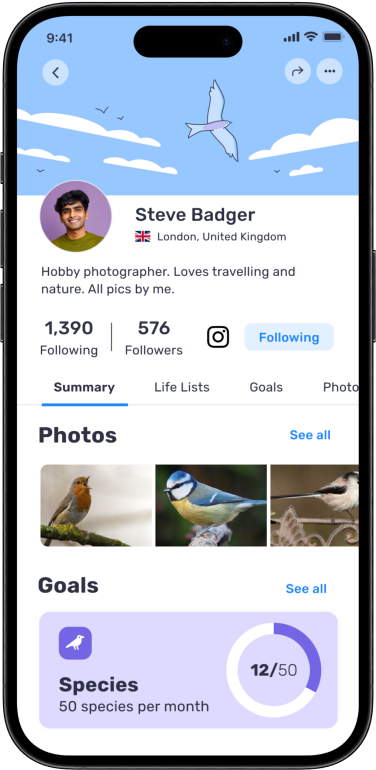
Birda is a birdwatching app and community aimed at curious people who want to deepen their connection with nature.





Your birdwatching journey like never before
Connect with nature in minutes
Take a walk, look out of the window and log the birds that you see. Feel good about those little connections to nature.

Discover the joy of birding
Find new birding spots, see more birds, share and celebrate with a like-minded community of nature lovers.

Play your part in saving nature
Logging your birding sightings and sessions turns into positive action for our planet. Every sighting counts.
Species Categories
AccentorsAfrican & New World ParrotsAlbatrossesAnhingas, DartersAuksAustral Storm PetrelsBulbulsBuntingsBushtitsCaracaras, FalconsCardinals & AlliesChachalacas, Curassows, GuansChats, Old World FlycatchersCormorants, ShagsCoursers, PratincolesCranesCrows, JaysCuckoosDippersDucks, Geese, SwansFinches, EuphoniasFinfootsFlamingosFrigatebirdsGannets, BoobiesGnatcatchersGoldcrests, KingletsGrassbirds & AlliesGrebesGulls, Terns, SkimmersHerons, BitternsHoopoesHummingbirdsIbises, SpoonbillsJacanasKingfishersKites, Hawks, EaglesLarksLeaf Warblers & AlliesLimpkinLongspurs, Snow BuntingsLoonsMockingbirds, ThrashersNew World QuailNew World SparrowsNew World VulturesNew World WarblersNightjarsNorthern Storm PetrelsNuthatchesOld World ParrotsOld World Sparrows, SnowfinchesOlive WarblerOropendolas, Orioles, BlackbirdsOspreysOwlsOystercatchersParrotbills & AlliesPelicansPenduline TitsPetrels, Shearwaters, Diving PetrelsPheasants & AlliesPigeons, DovesPloversRails, Crakes & CootsReed Warblers & AlliesSandpipers, SnipesShrikesSilky-flycatchersSkuasSpindalisesStarlings, RhabdornisStilts, AvocetsStone-curlews, Thick-kneesStorksSwallows, MartinsSwiftsSylviid BabblersTanagers & AlliesThrushesTits, ChickadeesTityras, Becards, SharpbillTreecreepersTrogonsTropicbirdsTyrant Flycatchers, CalypturaVireos, Greenlets, Shrike-babblersWagtails, PipitsWaxbills, Munias & AlliesWaxwingsWoodpeckersWrensYellow-breasted Chat
Birda Blog


What Our Birders Say

Sacha0508
Simply fantastic
I love this app, it puts so much fun into recording the birds I’ve seen and heard while I’m out and about. The interface is user-friendly and suitable for all ages. It’s great to collect badges and to review my “lists”.
Marlster24
Recommend for any bird watcher
Very wholesome app: I joined this app with a new interest in watching birds to help me find out what I was spotting. The community is very active in helping identify birds which is great and everyone is very kind so it’s just a nice wholesome community. I would definitely recommend this for any bird spotter 😃
Leonie
We've been waiting for an App like this
Excellent! We've been waiting for an app like this! Thank you! It would be nice if you could assign additional birds to sessions later!
Trevarthen1
Birda fan
I really enjoy using Birda, all sightings are recorded and photos can be added. There are monthly challenges which help to get you out to record your sightings. The Birda community are great and are happy to help with unidentified bird sightings. Suitable for all ages and experience!
Emcil24
A Friendly Place
I love using the bird app, I have a pretty good knowledge of birds. But I do have some gaps in it, so it’s nice to have a safe space to check on a sighting to confirm the species. It’s really enjoyable and I love the badges you can collect. It’s like a real life Pokémon go.
Louise L
Easy to use and accurate
Love this app. It is easy to use and accurate, Their backup communication is really good. I noted a missing species. All through the process, I was kept informed about the progress in correcting the information. I now have the corrected, updated version. 😁 Thanks!
Anonymous
The best bird logging app
Birda is honestly the best bird logging app I have seen. I love all the features it has from being able to do a session and log all the birds you see in one sitting, to being able to connect with other birders from all over the globe!
Nedz53
Really useful
Downloaded to give it a try, everything worked perfectly, recorded my first bird watching walk. Very impressed. Have already recommended to friends!
Jake W
Great app
I use this app all the time as it’s quick and easy to log individual sightings or whole birding sessions. It’s an excellent way to meet new people and the forum is full of really friendly people. The challenges are a great way to get involved and learn more about birds. Cannot recommend it enough!
Abi.M
Awesome App
I really enjoy using this app! It is such a friendly community of bird-lovers who are happy to help if I need ID advice. It’s been great motivation to get outdoors and go birding more! 10/10 😍😍
As featured in









Explore
Work with Birda
Work with Birda

Copyright © 2024 Chirp Birding. All rights reserved.