Birda Logo
Features
Birda+
About
Species Guide
Challenges
Shop
loading...
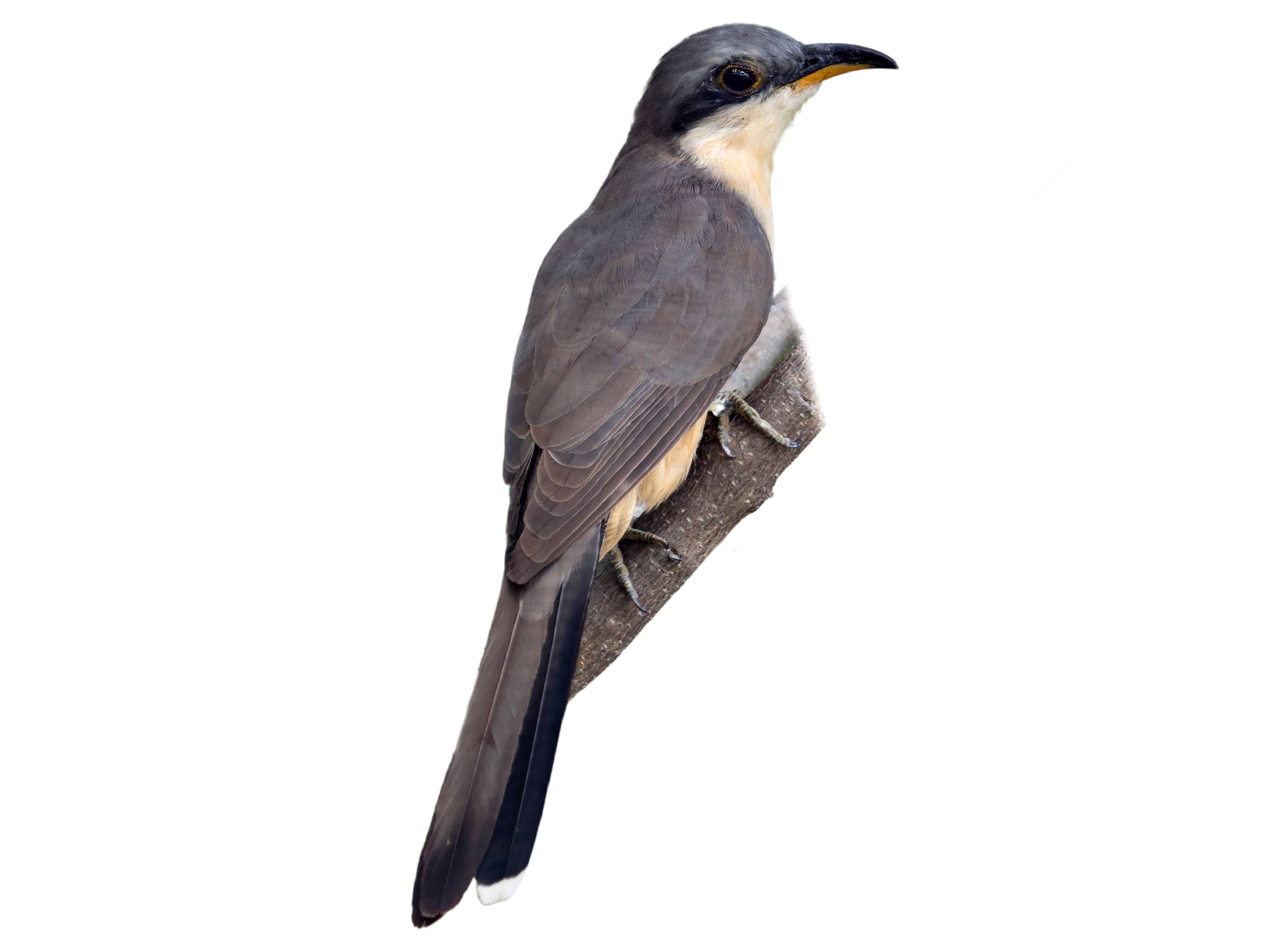
A photo of a Mangrove Cuckoo (Coccyzus minor)
Mangrove Cuckoo

Mangrove Cuckoo

Coccyzus minor

The Mangrove Cuckoo, Coccyzus minor, is a bird of considerable charm, with a long tail that is brown above and adorned with black-and-white below. Its bill curves elegantly, black in color with a touch of yellow on the lower mandible. The plumage on the head and upper parts is a uniform brown, while a striking yellow ring encircles the eye. This species is notably distinguished by its black facial mask and the buffy tones of its underparts. Despite its scientific name suggesting smallness, this cuckoo is, in fact, the largest of the three Coccyzus cuckoos found in North America.

Identification Tips

When observing this bird, look for its sizeable stature, measuring between 28–34 cm in length, with a wingspan of 38–43 cm. The bird's weight ranges from 64–102 grams. The black facial mask and buffy underparts are key features for identification, along with the yellow eye-ring.

Habitat

The Mangrove Cuckoo is typically found in mangrove swamps and hammocks, environments that provide both food and shelter.

Distribution

This cuckoo graces the southern reaches of Florida, the Caribbean, the coasts of Mexico and Central America, and the Atlantic coast of South America, extending as far south as the Amazon River's mouth.

Behaviour

The Mangrove Cuckoo is a resident bird, meaning it does not migrate but stays within its range year-round. It is generally fairly common within its specialized habitat but could face threats from human development.

Song & Calls

The vocalizations of the Mangrove Cuckoo include a guttural series of "gawk gawk gawk gawk gauk gauk" and occasionally a solitary "whit."

Breeding

Breeding Mangrove Cuckoos construct their nests 2–3 meters above water in mangrove trees or in a tree fork above ground. The typical clutch consists of two white eggs, each measuring 31 mm by 23 mm. Both parents participate in feeding the chicks.

Diet and Feeding

The diet of the Mangrove Cuckoo is varied, with a preference for caterpillars and grasshoppers. It will also consume other insects, their larvae, spiders, snails, small lizards, bird eggs, nestlings of small birds, and even fruit.

Conservation status

The IUCN Red List currently classifies the Mangrove Cuckoo as Least Concern, indicating that, at present, there are no immediate threats to its population numbers that would warrant a higher risk category. However, ongoing vigilance is required to ensure that habitat destruction does not impact this species adversely.


App logo
Birda is a birdwatching app and community aimed at curious people who want to deepen their connection with nature.

Mangrove Cuckoos on Birda

Photos
Sightings

More Cuckoos

Birda Logo

Your birdwatching journey like never before
Connect with nature in minutes

Take a walk, look out of the window and log the birds that you see. Feel good about those little connections to nature.
Discover the joy of birding
Find new birding spots, see more birds, share and celebrate with a like-minded community of nature lovers.
Play your part in saving nature
Logging your birding sightings and sessions turns into positive action for our planet. Every sighting counts.

Birda Blog

What Our Birders Say
Paul F
Very good database
Highly recommend. It great that this app shows you male Vs female variations when posting. Very good database I'm really impressed.
Patricia L
Very encouraging birding app
Easy to use, fun to see progress and encouraging to receive feedback from other users.
Birdafan
Ideal Birdwatch Companion
Simply adds to the enjoyment of my birdwatching and helps me record what I’ve seen.
Ellesse_W
Learning Birding with Birda
I’m relatively new to birding as a hobby, and Birda is a great way to keep track off all the species I see. I’m still working on my ID skills, but the app is great for figuring out potential species, and the online community is so friendly and helpful. Definitely recommend Birda to both early and serious birders! 🐦
Louise L
Easy to use and accurate
Love this app. It is easy to use and accurate, Their backup communication is really good. I noted a missing species. All through the process, I was kept informed about the progress in correcting the information. I now have the corrected, updated version. 😁 Thanks!
JCBirding
Just what birding needs
We need more fun in birding, for years it has had a reputation for being up tight and stuffy and only perused by retirees and anoraks. Birda helps change that perception and firmly brings birding into the 21st century! Fun, interactive while still contributing to science and conservation. If you aren’t on it, why not??
Jane N
A great app
Enjoying it immensely and finding it useful too. Recording the different birds and counting them is showing me how the present climate is affecting them all. I've trebled the numbers by planting native hedging. A great app.
Emma L
App got me interested in birding!
Super friendly community <3 This app got me interested in birding! It teaches me cool stuff and its super friendly, and fun :) The species guide is really developing my knowledge, and i love seeing cool new birds from round the world!
Bryan C
Clean and easy to use
Really enjoying this app, it's clean and easy to use. I love the ease of being able to add those one-off birds without starting a whole checklist. I also like the social aspect, like the parts of my Facebook I like, without the ads and junk, just birds. Can't wait to see it become more populated.
Pdydhdrexgi
Fantastic App
This is a really lovely app, for everyone interested in birds - from newbies to old hands. There is a very friendly feel to the community and you will genuinely learn a lot as you record your sightings and photos. There are lots of badges and competitions to keep you engaged, and a host of really useful features.
As featured in
Birda Logo
AboutPressAmbassadorsAffiliatesInfluencersCareersPrivacyTerms & Conditions
An app for birdwatchers
Connect with us
Copyright © 2024 Chirp Birding. All rights reserved.