Barn Owl
Tyto alba
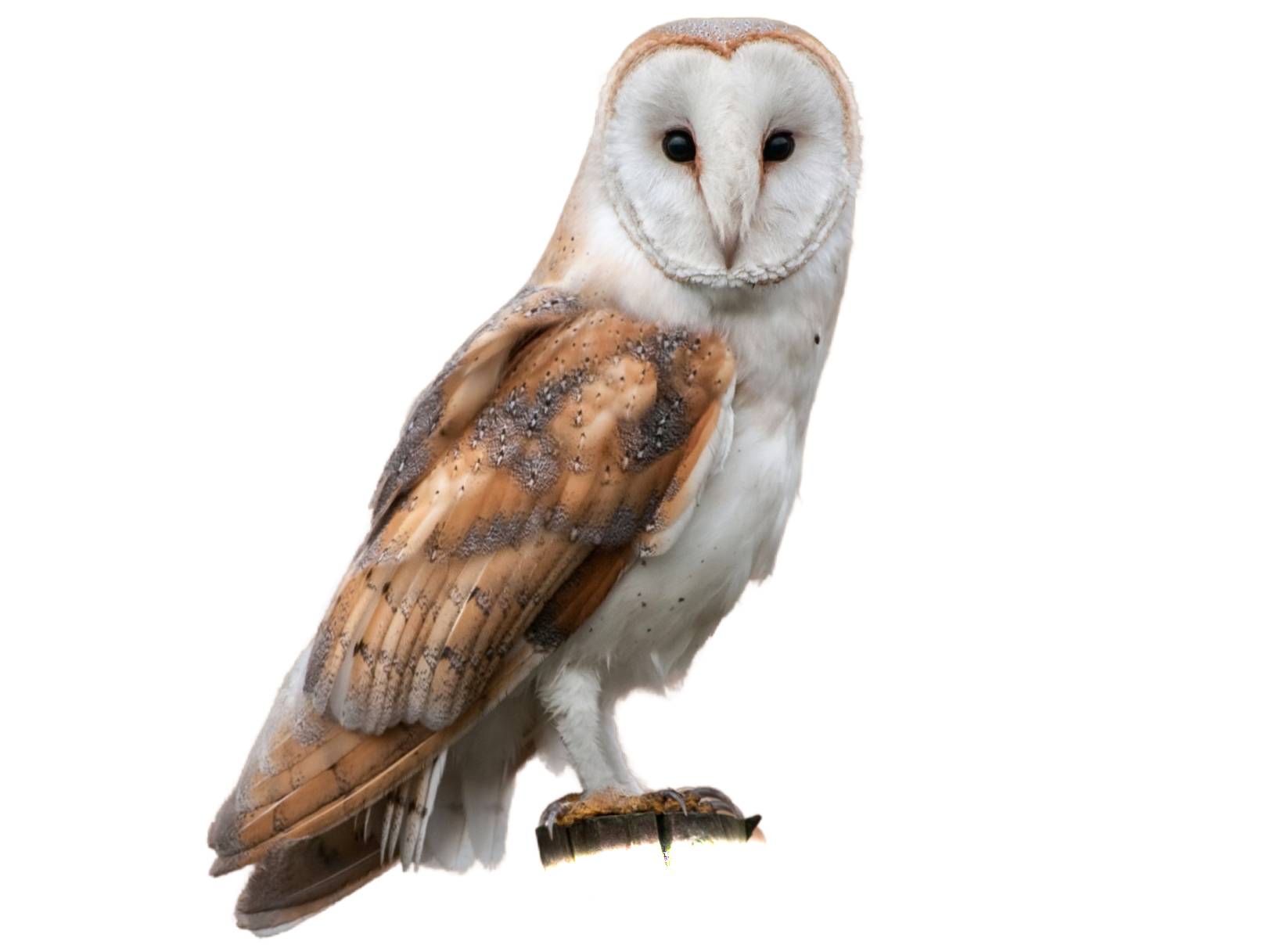
The barn owl (Tyto alba), a medium-sized and pale-colored owl, is distinguished by its long wings and short, square tail. Across its subspecies, it exhibits considerable variation in size and color, typically measuring 33 to 39 cm in length with a wingspan of 80 to 95 cm. The plumage on the head and back ranges from grey to brown, while the underparts can be white to brown, sometimes speckled with dark markings. The face is heart-shaped and predominantly white across most subspecies.
Identification Tips
To identify the barn owl in flight, look for its distinctive heart-shaped face, black eyes, and pale body. The tail shape helps distinguish it from other owls, and the undulating flight pattern is characteristic. The legs and feet are long and slender, aiding in silent flight and maneuverability.
Habitat
Barn owls favor open habitats such as farmland or grassland with interspersed woodland, typically below 2,000 meters in altitude. They are often found hunting along woodland edges or in rough grass strips next to pastures.
Distribution
This cosmopolitan species is found on every continent except Antarctica, avoiding only polar and desert regions, Asia north of the Himalayas, and some Pacific islands. It is generally sedentary, with young dispersing from natal sites along river corridors.
Behaviour
Barn owls are nocturnal but may also hunt by day in some regions like Great Britain and certain Pacific Islands. They are not particularly territorial but have a defined home range for foraging. Males and females usually roost separately outside the breeding season.
Song & Calls
The barn owl does not hoot but emits an eerie, drawn-out screech. Males may produce a shrill twitter during courtship, and both sexes can hiss like a snake to deter intruders.
Breeding
Breeding times vary by location, with clutches averaging about four eggs laid in nests located in hollow trees, old buildings, or cliff fissures. The female incubates the eggs and relies on the male for food.
Similar Species
The barn owl can be confused with other owl species, but its heart-shaped face, distinctive call, and flight pattern are key differentiating factors.
Diet and Feeding
Barn owls primarily feed on small mammals, which they locate by sound, thanks to their acute hearing. They may also consume birds, lizards, amphibians, and insects, depending on availability.
Conservation status
Globally, the barn owl is considered to be of least conservation concern, with populations capable of rapid expansion when prey is abundant. However, some subspecies with restricted ranges are more threatened.





Barn Owl Fun Facts
Barn Owls on Birda


Sightings


Your birdwatching journey like never before

Connect with nature in minutes

Discover the joy of birding

Play your part in saving nature
Birda Blog


What Our Birders Say

Easy to use and accurate
Gets me outdoors more
Fantastic app - Love it!
Best app for any birding person!
Love Birda
Sense of Community
Recommend for any bird watcher
A mordern game changer
Very Wholesome App
Clean and easy to use