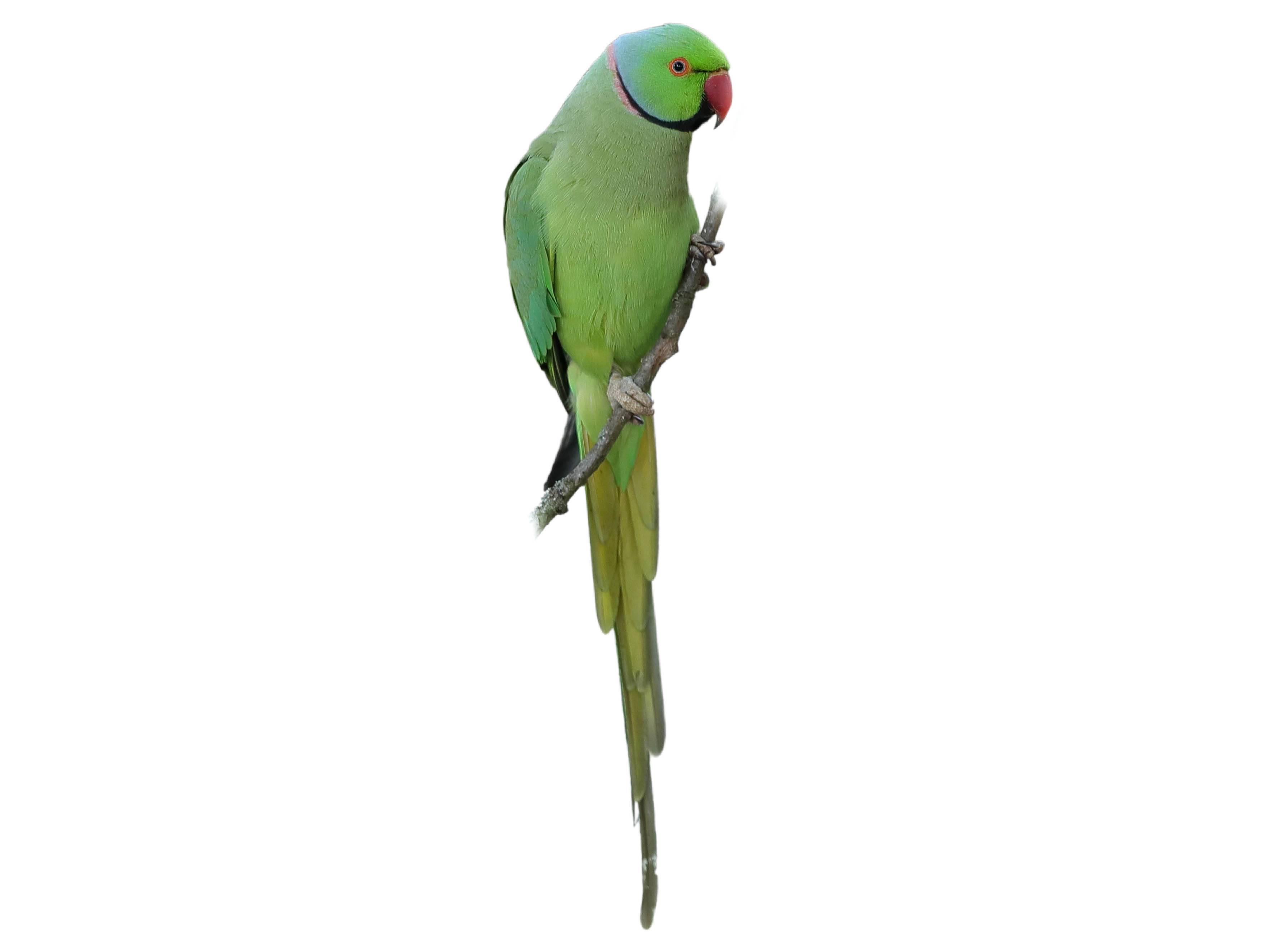
Rose-ringed Parakeet
Psittacula krameri
The rose-ringed parakeet, also known as the ringneck parrot or Kramer parrot, is a medium-sized parrot with a striking appearance. Males are adorned with a pink and black neck ring, while females and young birds display a more subdued coloration with pale to dark grey neck rings or none at all. In the wild, these birds boast a vibrant green plumage, complemented by a red beak and a blue tail. Captive breeding has led to a kaleidoscope of color mutations, including turquoise, cinnamon, olive, white, blue, violet, grey, and yellow. The species measures approximately 40 cm in length, with the tail feathers making up a significant portion of this measurement.
Identification Tips
Adult males can be identified by their distinctive neck rings. Both sexes exhibit a green coloration in their natural habitat, with a red beak and blue tail feathers. The average wing length ranges from 15 to 17.5 cm. When observing these parakeets, listen for their unmistakable squawking call, which is quite prominent in the wild.
Habitat
The rose-ringed parakeet thrives in disturbed habitats and has shown remarkable adaptability to urban and deforested areas. It is one of the few parrot species that have successfully adapted to such environments.
Distribution
Native to Africa and the Indian Subcontinent, the rose-ringed parakeet has established feral populations in various parts of the world, including Northern and Western Europe. It is known for breeding further north than any other parrot species.
Behaviour
These parakeets are herbivorous and non-migratory. They have adapted well to living in a variety of climates, even tolerating low winter temperatures in Northern Europe. In urban settings, they are often seen visiting gardens and bird feeders.
Song & Calls
In its natural environment, the rose-ringed parakeet is quite vocal with a loud, squawking call. Captive birds have the potential to be taught to mimic human speech, with some individuals becoming quite proficient talkers.
Breeding
The breeding season for the Indian rose-ringed parakeet occurs from September to December, with pairs forming and defending nest sites to avoid competition. The female's diet during winter, which includes peas, provides essential nutrients for egg production. The care for young extends from April to June, with fledglings ready to leave the nest before the monsoon season.
Similar Species
The rose-ringed parakeet may be confused with other Psittacula species, but the presence of the neck ring in males and the distinctive squawking call can aid in proper identification.
Diet and Feeding
Wild rose-ringed parakeets feed on a variety of plant materials, including buds, fruits, vegetables, nuts, berries, and seeds. They are known to cause damage to farmlands and orchards. In captivity, they can be fed fruits, vegetables, pellets, seeds, and small amounts of cooked meat for protein.
Conservation status
The International Union for Conservation of Nature (IUCN) lists the rose-ringed parakeet as Least Concern, with populations appearing to be increasing. However, its popularity as a pet and its status as a pest in some parts of its native range have led to localized declines.






Rose-ringed Parakeets on Birda


Sightings


More Old World Parrots



Your birdwatching journey like never before

Connect with nature in minutes

Discover the joy of birding

Play your part in saving nature
Birda Blog


What Our Birders Say

Sense of Community
Great app for learning Birds
Really great app
Very Wholesome App
Awesome Birding Community
Fantastic to be involved
Easy to use and accurate
Great app for beginner twitchers
Loving it
Birda fan